
Insights for serious fanciers who play to win
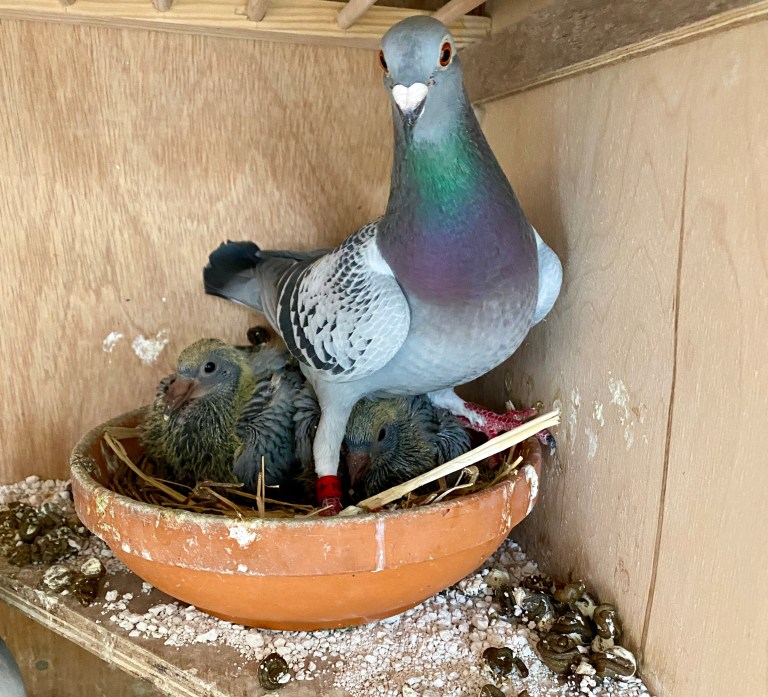
At DuijvesteinHattem, we don’t believe in luck. We believe in performance, precision, and pedigree. Breeding champions isn’t about following the crowd – it’s about daring to raise the bar.
Here’s what it really takes to breed the kind of pigeon that leaves the rest behind:
1. Breed from unrelated champions
The biggest myth in pigeon racing? That inbreeding creates winners.
The truth is clear: history’s greatest racers came from performance birds with no close relation.
The more unrelated champions in the pedigree, the more genetic potential you unlock.
2. Only breed from the far right side of the bell curve
We breed only from the extraordinary – not the average.
You want outliers. Birds that break the pattern. For example:
- A pigeon that placed in the top 20 nationally at least 3 times
- A bird that flew an hour ahead of the pack from a tough Barcelona
- A pigeon from the East or North that still finishes top 20 nationally (despite the geographic disadvantage)
The higher the bar for the parents, the better the chances their children will dominate.
3. Let them choose: natural pairing works
Champions don’t like being forced.
Let your breeders choose their own mate now and then – you’ll be surprised at the motivation it creates. Nature knows best – and often delivers stronger, more balanced young.
4. The first egg is often gold
Many greats hatched from the first egg of a young hen. That egg holds the full force of her vitality.
Handle it with care. It could be the future of your loft.
5. Top hens are non-negotiable
The hen shapes the body – the frame, the strength, the structure.
Your cocks can have flaws – your hens cannot.
Build your breeding loft around the very best hens you can find.
6. Champion × Champion only
Whether you’re linebreeding or crossing bloodlines, there’s one golden rule:
Only pair winners with winners.
Never breed a top racer to a poor-performing daughter.
Inbreeding may improve the look – rarely the performance.
7. Feed smart: minerals over grain
If you have to choose, skip the fancy grain and invest in premium minerals.
Grain is cheap – but without minerals, bones stay soft, muscles stay weak, and futures fade early.
8. No gaps in nutrition – ever
Missed feedings in the first 20–25 days can cause permanent developmental damage.
Your youngsters should never know what hunger feels like.
Feed and minerals must be available day and night.
“Breed from the best. Cross with purpose. Feed with intention. Trust performance over theory.
That’s how champions are made.”
— DuijvesteinHattem
 DuijvesteinHattem Netherlands